Nature Through My Cam

Thursday, 18 May 2017

FLOWERS

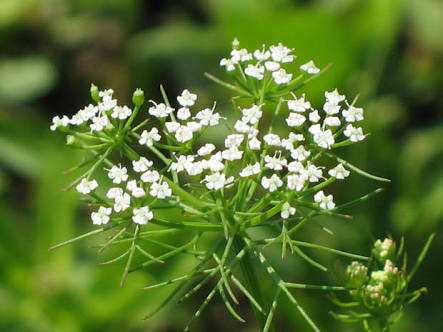
A flower, sometimes known as a bloom or blossom, is the reproductive structure found in plants that are floral (plants of the division Magnoliophyta, also called angiosperms). The biological function of a flower is to effect reproduction, usually by providing a mechanism for the union of sperm with eggs. Flowers may facilitate outcrossing (fusion of sperm and eggs from different individuals in a population) or allow selfing (fusion of sperm and egg from the same flower). Some flowers produce diaspores without fertilization (parthenocarpy). Flowers contain sporangia and are the site where gametophytes develop. Many flowers have evolved to be attractive to animals, so as to cause them to be vectors for the transfer of pollen. After fertilization, the ovary of the flower develops into fruit containing seeds.
In addition to facilitating the reproduction of flowering plants, flowers have long been admired and used by humans to beautify their environment, and also as objects of romance, ritual, religion, medicine and as a source of food.
Inside the sepals is another ring of modified leaves called petals which are often brightly coloured. This layer is known as the corolla. Within the corolla are one or more stamens containing pollen, which are the male reproductive structures. In the very centre of the flower are the female reproductive organs.
Flowers bloom to attract insects, which then carry pollen from one flower to another and fertilize the growing fruits and seeds. In other words, it's plant reproductive process. Ove Nilsson is Professor of Plant Reproduction Biology at the Ume Plant Science Centre.

The rose is a type of flowering shrub. Its name comes from the Latin word Rosa. The flowers of the rose grow in many different colors, from the well-known red rose or yellow roses and sometimes white or purple roses. Roses belong to the family of plants called Rosaceae.
Most species are native to Asia, with smaller numbers native to Europe, North America, and northwestern Africa. Species, cultivars and hybrids are all widely grown for their beauty and often are fragrant. Roses have acquired cultural significance in many societies.


Thursday, 4 May 2017

Jasmine

Jasmine is a genus of plants. They are shrubs or vines that grow in moderately warm climates. There are about 200 different species of Jasmine. They are also quite liked in gardens.Tea can be made from the flowers. Some species are used to make special oil,perfumes or incense. Women, especially from Asia sometimes wear jasmine flowers in their hair. Jasmine flowers are white or yellow in colour, although in rare instances they can be slightly reddish. Jasmine flowers are well known for their lovely smell. Jasmine can also be a female name.


Saturday, 11 February 2017

Fogs

          Fog consists of visible cloud water droplets or ice crystals suspended in the air at or near the Earth's surface. Fog can be considered a type of low-lying cloud and is heavily influenced by nearby bodies of water, topography, and wind conditions. In turn, fog has affected many human activities, such as shipping, travel, and warfare.

The term "fog" is typically distinguished from the more generic term "cloud" in that fog is low-lying, and the moisture in the fog is often generated locally (such as from a nearby body of water, like a lake or the ocean, or from nearby moist ground or marshes).
By definition, fog reduces visibility to less than 1 kilometre (0.62 mi), whereas mist causes lesser impairment of visibility.
For aviation purposes in the UK, a visibility of less than 5 kilometres (3.1 mi) but greater than 999 metres (3,278 ft) is considered to be mist if the relative humidity is 70% or greater; below 70%, haze is reported

fog
Fog


Wednesday, 14 December 2016

Grass

Grass is a type of plant.A common kind of grass is used to cover the ground, in a lawn.
Graminoidsare a broader group which includes the grasses. They are monocotyledons, usually herbaceous plants with narrow leaves growing from the base. They include the "true grasses", of the family Poaceae(also called Gramineae), as well as the sedges(Cyperaceae) and therushes(Juncaceae). These three families are not closely related but belong to differentcladesin the order Poales.
The true grasses include cereals,bamboo and the grasses oflawns(turf) and grassland. Uses for graminoids include food(asgrain,sprouted grain,shoots  orrhizomes), drink (beer,whisky),pasture for live stock, thatch, paper, fuel, clothing, insulation, construction, sports turf, basket weaving and many others.
Many grasses are short, but some grasses, like bamboo can grow very tall. Plants from the grass family can grow in many places, even if they are very cold or very dry. Several other plants that look similar but are not members of the grass family are also sometimes called grass; these includerushes,reeds,papyrus, andwater chestnut.
Grasses are an important food for many animals, like deer, buffalo, cattle, mice, grasshoppers, caterpillars, and many othergrazers. Unlike other plants, grasses grow from the bottom, so when animals eat grass they usually don't destroy the part that grows.Without grass, dirt can wash away into rivers. This is called erosion.

Evolution of grass

Graminoids include some of the most versatile plant life-forms. They became wide spread toward the end of theCretaceous. Fossilizeddinosaurdung (coprolites) have been found containing grassphytoliths(silicastones inside grass leaves).Grasses have adapted to conditions in lushrain forests, drydeserts, cold mountains and even intertidal habitats, and are now the most wide spread plant type. Grass is a valuable source of food and energy for many animals.

Grass and people

Lawn grass is often planted on sports fields and in the area around a building. Sometimes chemical sand water is used to help lawns to grow.
People have used grasses for a long time. People eat parts of grasses. Corn, wheat, barley, oats, rice and milletarecereals, common grains whose seeds are used for food and to makealcoholsuch as beer.
Sugar comes fromsugar cane, which is also a plant in the grass family. People have grown grasses as food forfarm animals for about 10,000 years. Grasses have also been used to make paper for more than 4000 years. Peopleuse bamboo to build houses, fences, furniture and other things. Grass plants can also be used as fuel, to cover roofs, and to weave baskets.Though most people don't think so , grass shouldn't be cut, it shreds the grass and causes brown spots on a lawn.Once grass has grown 9 inches,it will cut its self ,by the top up from the tiller .
Shyam mohan
Grass

Buhaira corniche, Sharjah

Sharjah(الشارقة‎‎) is the third largest and third most populous city in the United Arab Emirates, forming part of the Dubai-Sharjah-Ajman metropolitan area. It is located along the southern coast of the Persian Gulf on the Arabian Peninsula.Sharjah is the capital of theemirate of Sharjah. Sharjah shares legal, political, military and economic functions with the other emirates of the UAE within a federal framework, although each emirate has jurisdiction over some functions such as civil law enforcement and provision and up keep of local facilities. Sharjah has been ruled by theAl Qasimidynasty since the 18th century.The city is a centre for culture and industry, and alone contributes 7.4% of the GDP of the United Arab Emirates.The city covers an approximate area of 235 km² and has a population of over 800,000 (2008). The sale or consumption of alcoholic beverages is prohibited in the emirate of Sharjah without possession of an alcohol licence and alcohol is not served in Sharjah hotels, restaurants or other outlets due to the Muslim majority in the area. This has helped Sharjah increase thenumber of Islamic tourists who visit the country.Sharjah has been officially named as a WHO healthy city.The 2016 edition of QS Best Student Cities ranked Sharjah as the 68th best city in the world to be a university student.Sharjah is regarded as the cultural capital of the UAE,and was the Islamic culture capital in 2014.

Overview

Sharjah is the third largest city in the United Arab Emirates after Dubai and Abu Dhabi. The palace of the ruler of the Emirate of Sharjah, His Highness Sheikh Dr.Sultan bin Muhammad Al-Qasimiis located about 20 kilometres (12 mi) southeast of the city.The city of Sharjah overlooks thePersian Gulfand has a population of over 800,000 (2008). It contains the main administrative and commercial centres together with an array of cultural and traditional projects, including several museums covering areas such as archaeology, natural history, science, arts, heritage, Islamic art and culture. Distinctive landmarks include two major coveredsouks, reflecting Islamic design, and a number of recreational areas and public parks such as AlMontazah Fun Park and Al Buheirah Corniche.The city is also notable for its numerous elegant mosques.After the construction boom that took place in Dubai in 2005, towering skyscrapers and modern buildings were constructed in areas like Al Khan and Khaled Lagoon. These modern tall buildings and the subsequent increase in population coupled with inadequate infrastructure made Sharjah suffer from traffic jams. This was also due to its location between the northeastern emirates and Dubai. Many Sharjah residents travel 15 km (9.3 mi) to visit Dubai on the weekend. Sharjah is bordered by the cities of Dubai andAjmānand is about 170 km (110 mi) away from the capital cityAbu Dhabi.
Dijin
buhaira corniche